

Emphanic · AI product studio of Tom Suter

I design and build AI products, from strategy to launch.

Over the years I have built hundreds of products, moving from classic development to low-code and no-code platforms. For the past three years I have built fully with AI. Emphanic is where those AI products live, from the iPhone game Heatwave to a tool for validating product ideas, a daily puzzle and Swiss finance calculators.

Each product starts from a concrete question. Below you will find my latest products, how I work, the tools I use and the latest developments in AI.

Portfolio

Products

My most recent products, all designed, built and launched with AI.

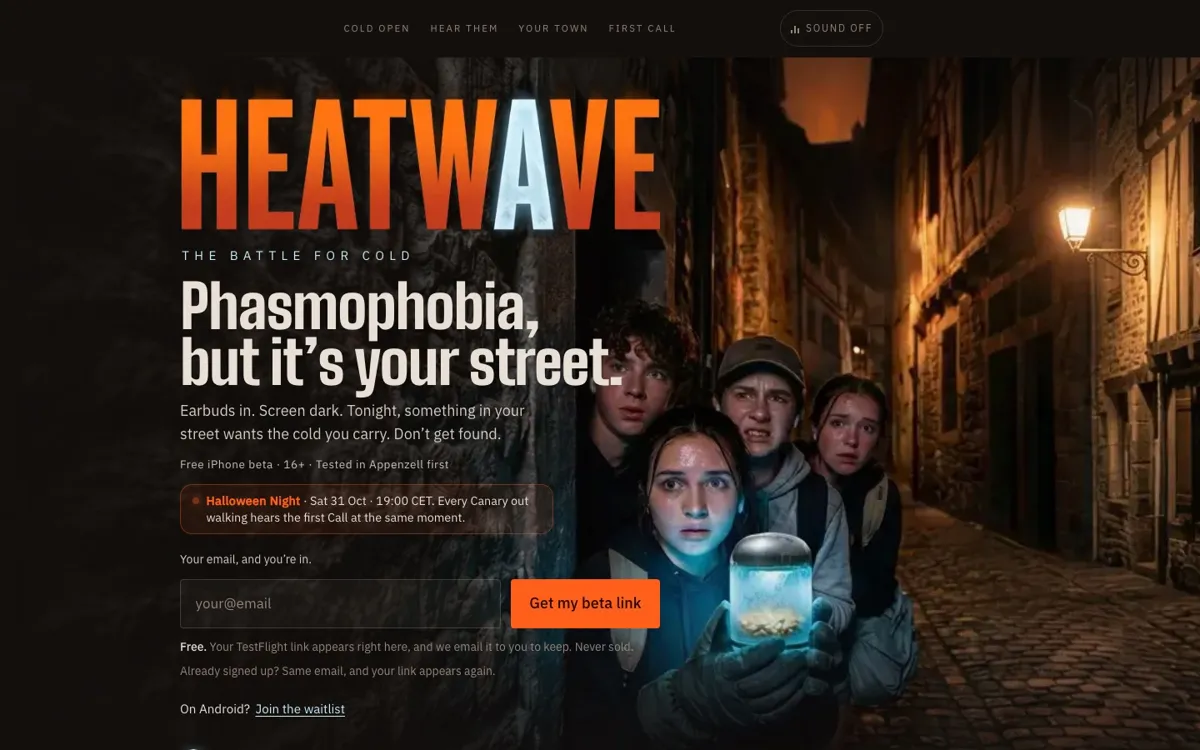
Heatwave, The Battle for Cold
Latest productiOS beta

Heatwave

The Battle for Cold

A location based horror game for iPhone, played outdoors with earbuds. Designed for groups of friends and first tested in Appenzell.

Key questionWhether a phone, earbuds and familiar streets can create a more immersive experience than a screen, and whether one builder working with AI can ship a full mobile game to real players.

  • iOS
  • Next.js
  • Supabase
  • PostHog
Join the free iPhone beta
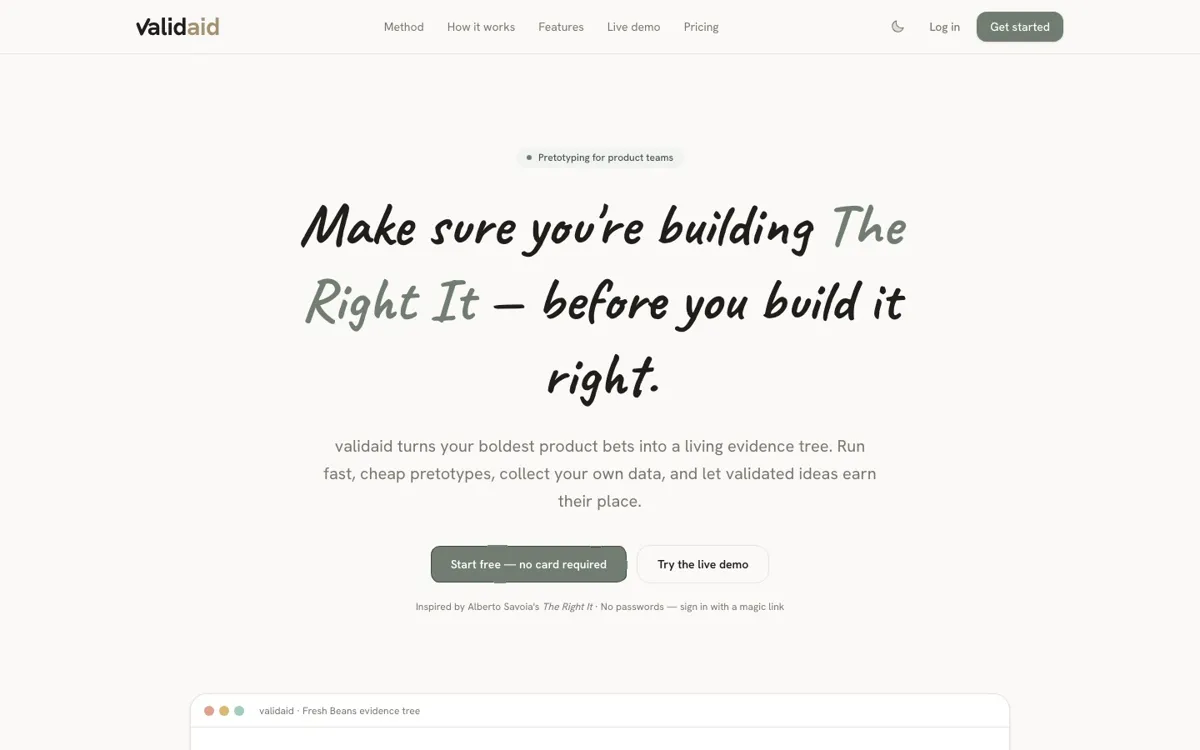
Validaid
SaaSBeta

Validaid

Turns product ideas into a structured evidence tree. Start from a vision, add test and learning cards, and score every test on time, distance and cost to real data. AI sharpens each card.

Key questionWhether the discipline of Alberto Savoia's The Right It and Strategyzer's test cards survives being turned into software, and whether AI can make a vague bet sharp enough to test.

  • Next.js
  • Supabase
  • React Flow
  • Stripe
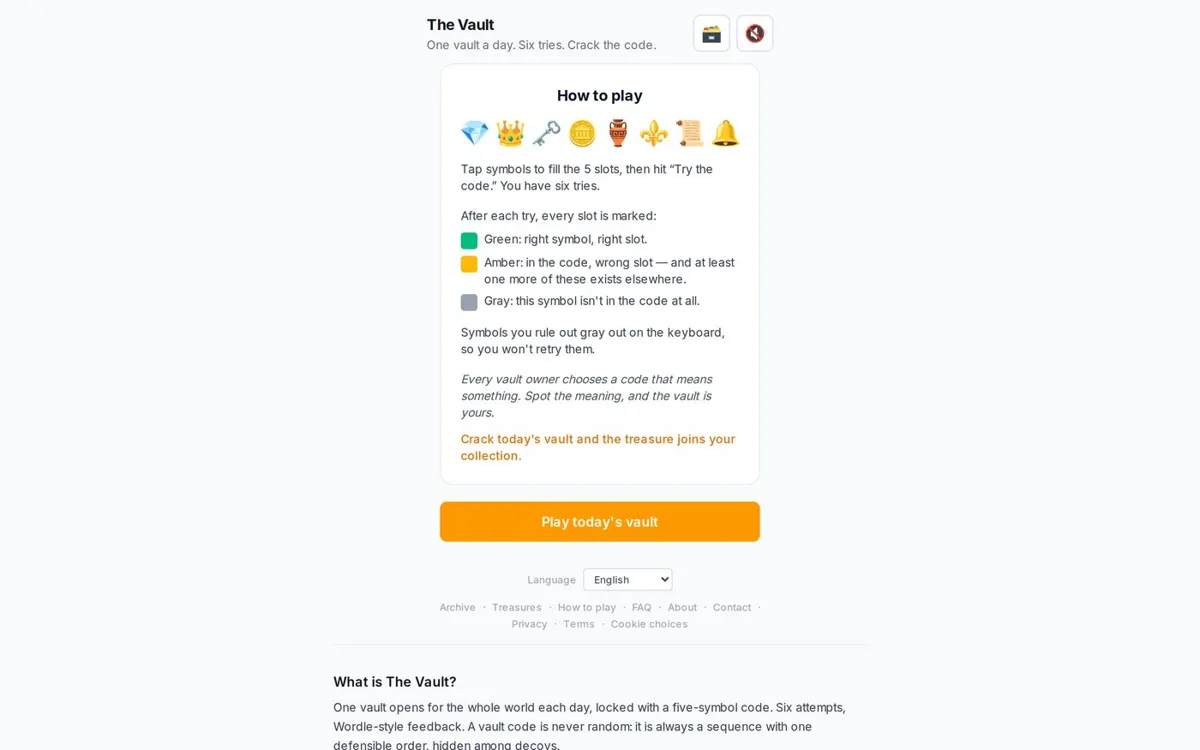
vault.day
GameLive

vault.day

A daily code-breaking game. One global vault per day, a five-emoji code, six attempts and a par to beat. Days add up to weekly challenges, in five languages and without an account.

Key questionWhether a new puzzle can go live every day that is solvable, fair and engaging, without manual review.

  • Next.js
  • Tailwind
  • Vitest
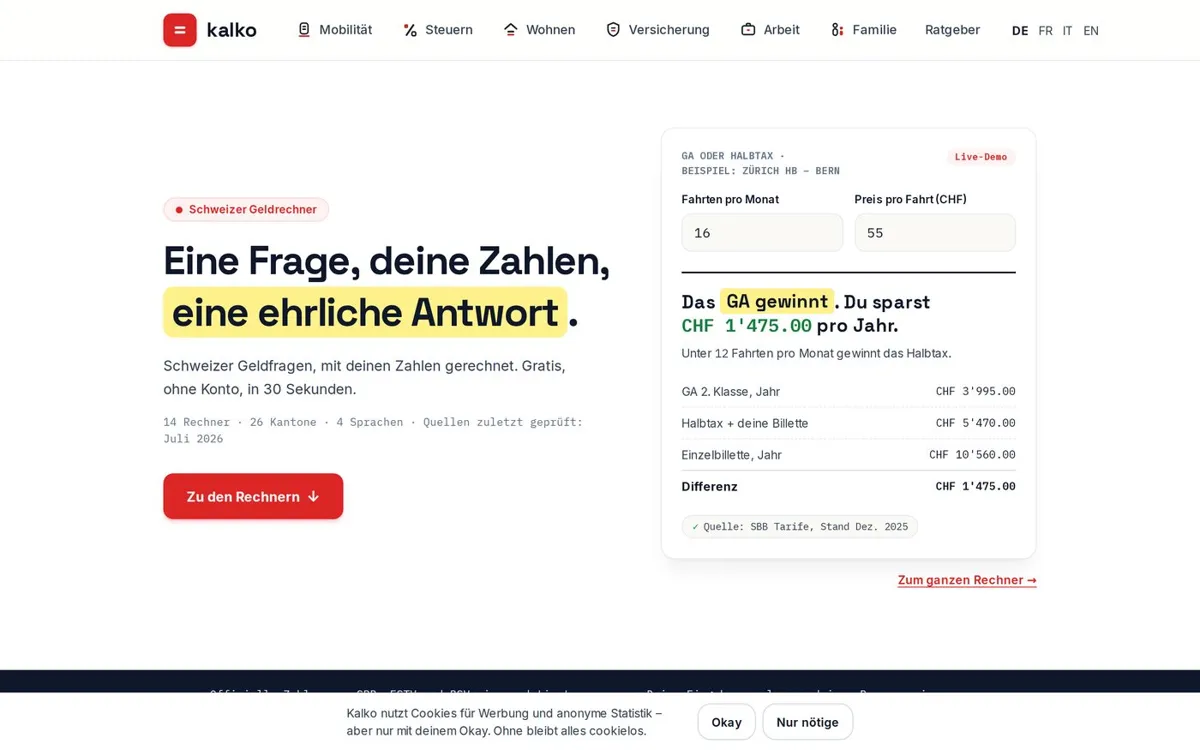
kalko.ch
ToolLive

kalko.ch

Free Swiss finance calculators in four languages. One question, your figures, an answer in thirty seconds. Behind it sits a maintained Swiss dataset that updates itself when an official source changes.

Key questionWhether a focused, useful tool site can still be found in Switzerland, and how much of the building, translation and maintenance AI can take on.

  • Next.js
  • Zod
  • Playwright
  • GitHub Actions
Emphanic AI visibility check
SaaSLive

AI visibility check

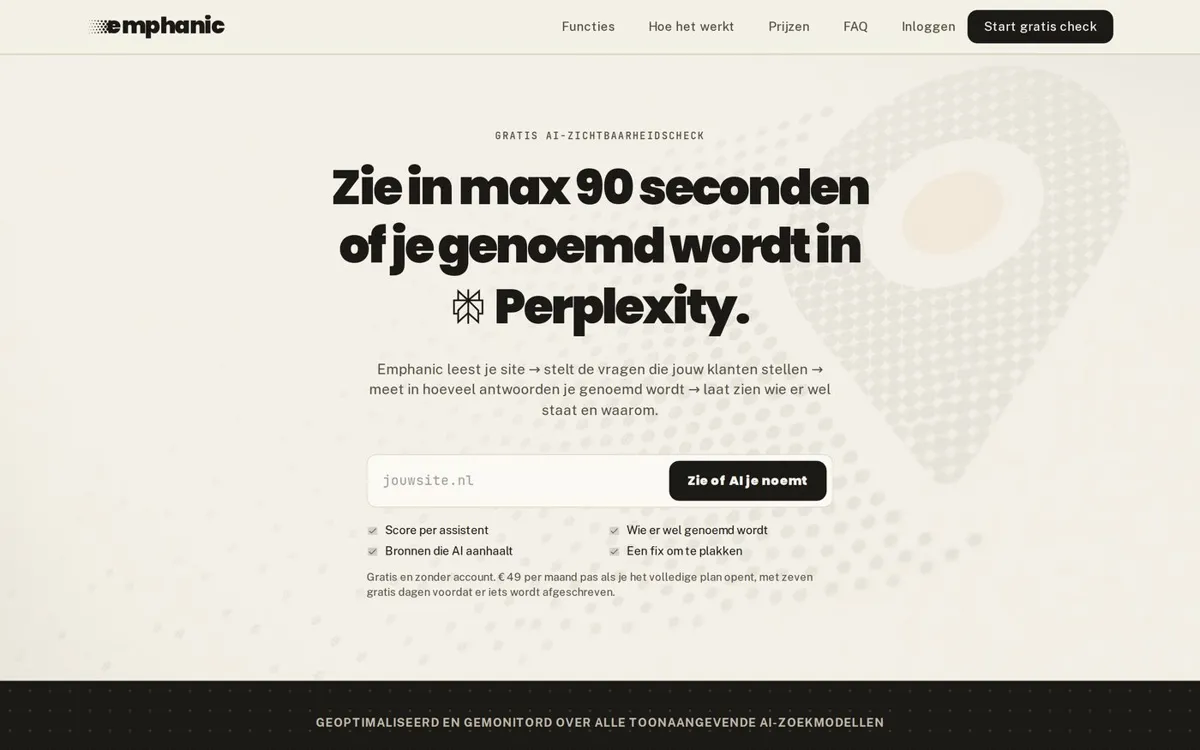
The original Emphanic product. It measures how often ChatGPT, Claude, Perplexity and Gemini name a business, and which competitors they name instead.

Key questionWhether something as elusive as "does AI recommend me" can be measured reliably, week after week, in a way a business owner can act on.

  • Next.js
  • Supabase
  • Stripe
  • 4 AI engines
swisschatbot.ch
Product

swisschatbot.ch

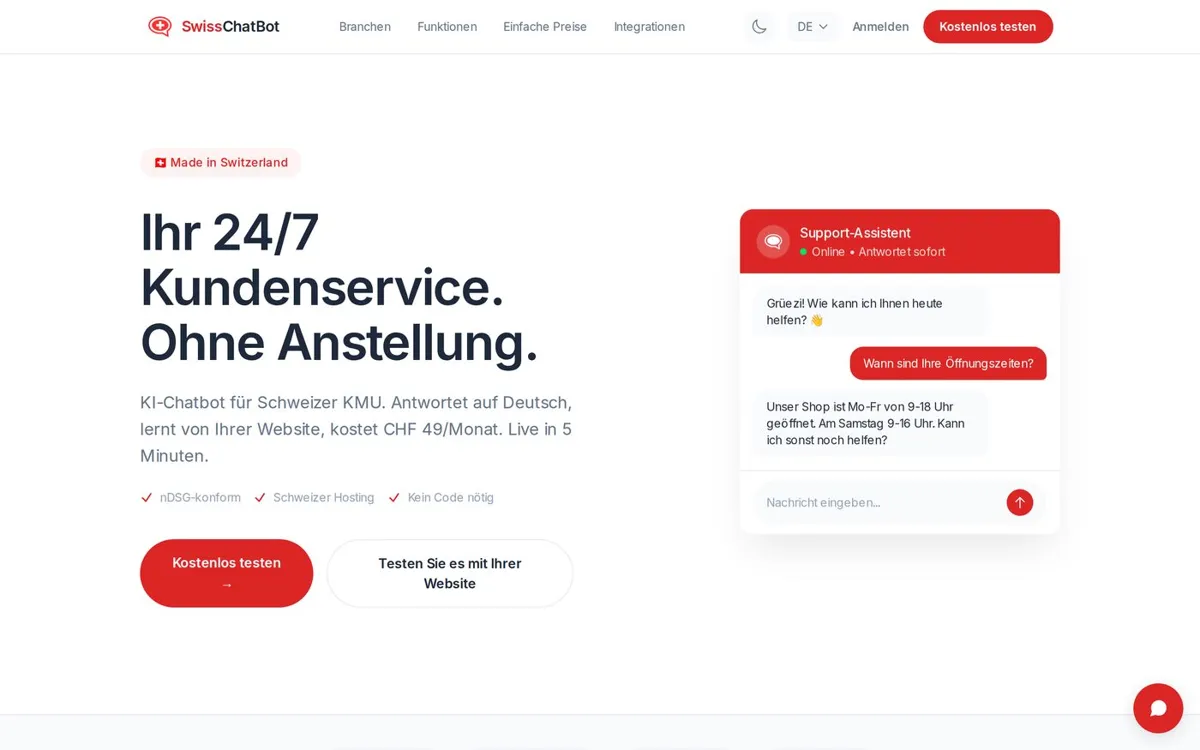
AI chatbots for Swiss small and medium businesses, trained on a company's own content. The models run locally on a Mac mini with Ollama, connected securely through Tailscale, so the data stays on Swiss hardware.

Key questionWhether a chatbot trained on a company's own pages becomes good enough to sell, and what it takes for a business owner to trust it with customers.

  • Ollama
  • Mac mini
  • Tailscale
brightcast.news
MediaPilot

brightcast.news

Constructive news: the day's stories collected, rated for impact and retold with the constructive angle included, on the web and in a mobile app.

Key questionWhether a news pipeline can run on its own, from collection to publication, and still be worth reading.

  • Expo
  • React Native
  • Firebase

Approach

How I work

01

Start from a clear question

Not from a feature list. Every product answers a question that research alone could not settle, and that question sets the priorities.

02

Launch early, then measure

A live product with real users tells more than any presentation. Prototypes go out early, as a beta where needed, and data decides what stays.

03

AI as the team, human review as the standard

AI agents write much of the code, copy and translations. I review, test and take responsibility for every result before it ships.

Toolkit

My tools

The tools, models and protocols I build with every day, and what each one taught me.

Tooling

Claude Code

My primary development tool. It loads its own skills, runs subagents in parallel, uses a separate git worktree per branch, and automated checks stop a build when a retired design value reappears.

Key insightHow much of a real codebase an agent can handle at once, and where human oversight remains essential.

Tooling

Codex

A second tool on the same repository, with its own config file and its own list of MCP servers.

Key insightTwo agents with different habits on one codebase. The repository needed rules that hold regardless of which agent is working.

Design

Claude Design

The visual system lives outside the code, in its own design project, and gets pulled into the repo one component at a time.

Key insightDesign decides colour, type and shape; code decides how they are built. Documenting that split ended most of the debate.

Models

OpenAI, Anthropic, Google, Perplexity

GPT, Claude, Gemini and Perplexity, all behind one adapter that logs tokens and cost on every single call and stops at a monthly budget.

Key insightFour assistants answer the same question differently, which is why the visibility check exists. Central metering keeps costs predictable.

Agents

Agent team

Eight agents with separate roles, each reporting to a lead agent that ranks the results before I review them.

Key insightA team of agents produces a lot of confident output quickly. Nothing is published without my review.

Protocol

MCP

Model Context Protocol. The database hangs off it as a server, so Claude Code and Codex both reach the same Supabase through one shared set of tools.

Key insightA connection described once works in every tool I adopt next. That portability proved more valuable than the connection itself.

Why "emphanic"

Empathic, and visible.

Two words pressed into one. Empathic, understanding the person in front of you and what they actually need. And emphanes, Greek for visible, manifest, showing itself plainly.

That combination is the idea behind the studio: technology is valuable when it understands what someone means and makes the result visible. The name fit a tool about being found by AI, and it fits everything else here as well.

I am Tom Suter. I moved from the Netherlands to Switzerland in 2017 and live in Appenzell AI. My career spans web, product, SaaS, startups and agile ways of working, and today I work at 42hacks. Alongside that, I explore the opportunities of AI closely and hands-on. I have built hundreds of products over the years, from classic development to low-code and no-code, and for the past three years fully with AI. Emphanic is where that work comes together.

FAQ

Questions people ask

Who is Tom Suter?

Tom Suter is a Dutch product builder who has lived in Switzerland since 2017 and works at 42hacks. Alongside that, he explores the opportunities of AI closely and hands-on. Over the years he has built hundreds of products, moving from classic development to low-code and no-code platforms, and for the past three years he has worked fully with AI. His background spans web, product, SaaS, startups and agile ways of working.

What is Emphanic?

Emphanic is the AI product studio of Tom Suter. The name combines empathic, understanding what someone needs, with the Greek emphanes, visible. It is where his products and experiments with AI live.

Which AI products has Tom Suter built recently?

His most recent AI products are Heatwave, an iPhone horror game; Validaid, a tool for testing product ideas; vault.day, a daily puzzle game; kalko.ch, Swiss finance calculators; the Emphanic AI visibility check; swisschatbot.ch; and brightcast.news.

Which AI tools does Tom Suter work with?

Mainly Claude Code and Codex for building, Claude Design for the visual system, MCP to connect tools and data, and models from OpenAI, Anthropic, Google and Perplexity behind one metered adapter.

What if I have an AI challenge?

Simply get in touch. Whether it is a first question about what AI can do for your business, a second opinion on a plan or a product you want built, I would love to help. Email tsuter5@gmail.com or connect on LinkedIn.

Got an idea? Want to validate it fast?

Maybe I can help. Get in touch, and we will look at how to test your idea quickly, with real users and real data.